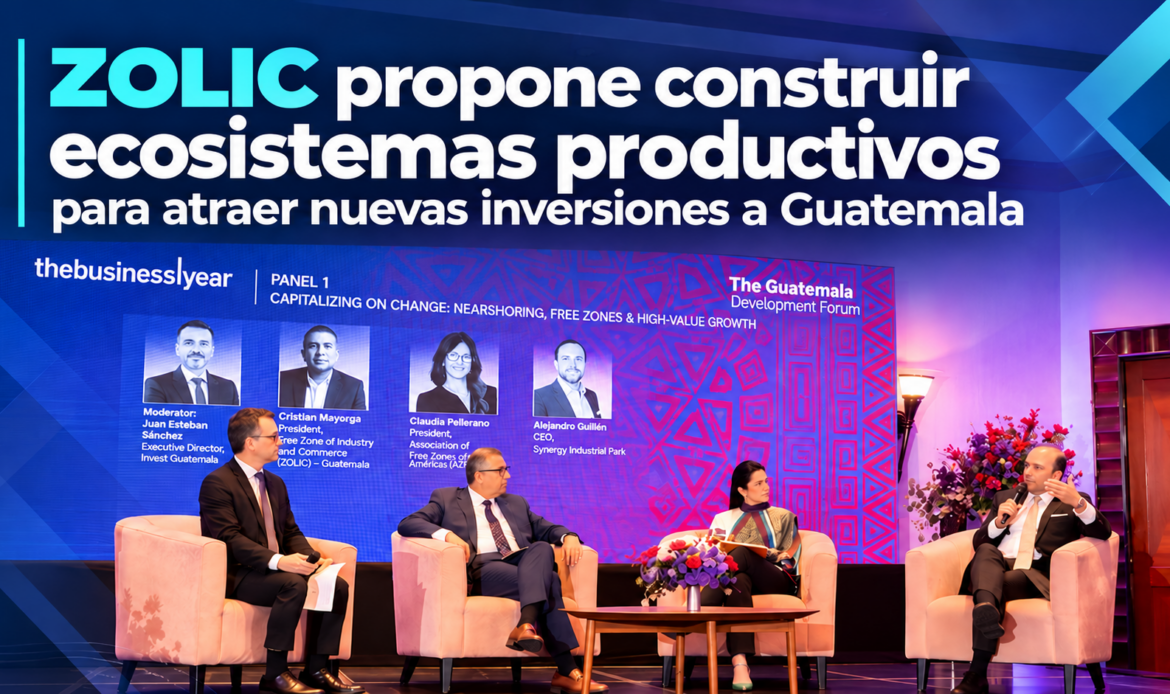
Cristian Mayorga, chairman of ZOLIC's Board of Directors, stated during the Guatemala Development Forum 2026 that the country must move toward a more targeted approach to investment promotion, one capable of attracting companies that can integrate with existing operations and give rise to new production clusters.
Guatemala has the conditions to attract new investments related to the nearshoring, but competition is no longer just about offering incentives. The next step is to identify sectors with growth potential in the country and attract companies that can integrate into existing production chains.
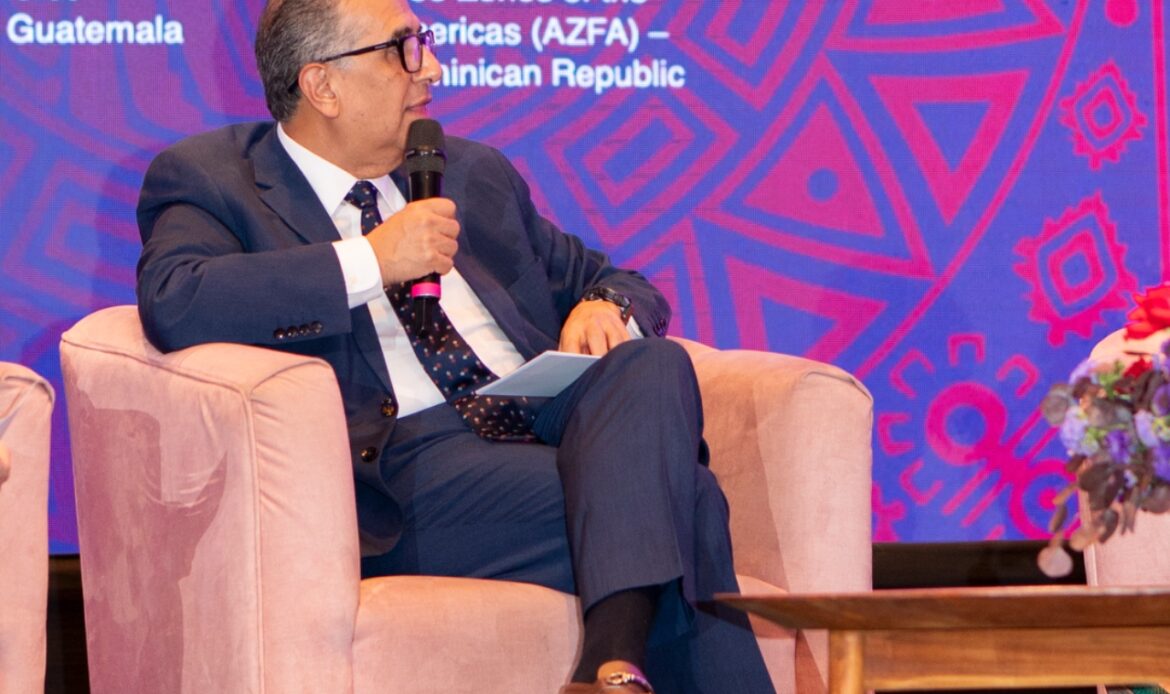
That was one of the points raised by Cristian Mayorga, chairman of the ZOLIC Board of Directors, during the Guatemala Development Forum 2026, held on September 23 in Guatemala City.
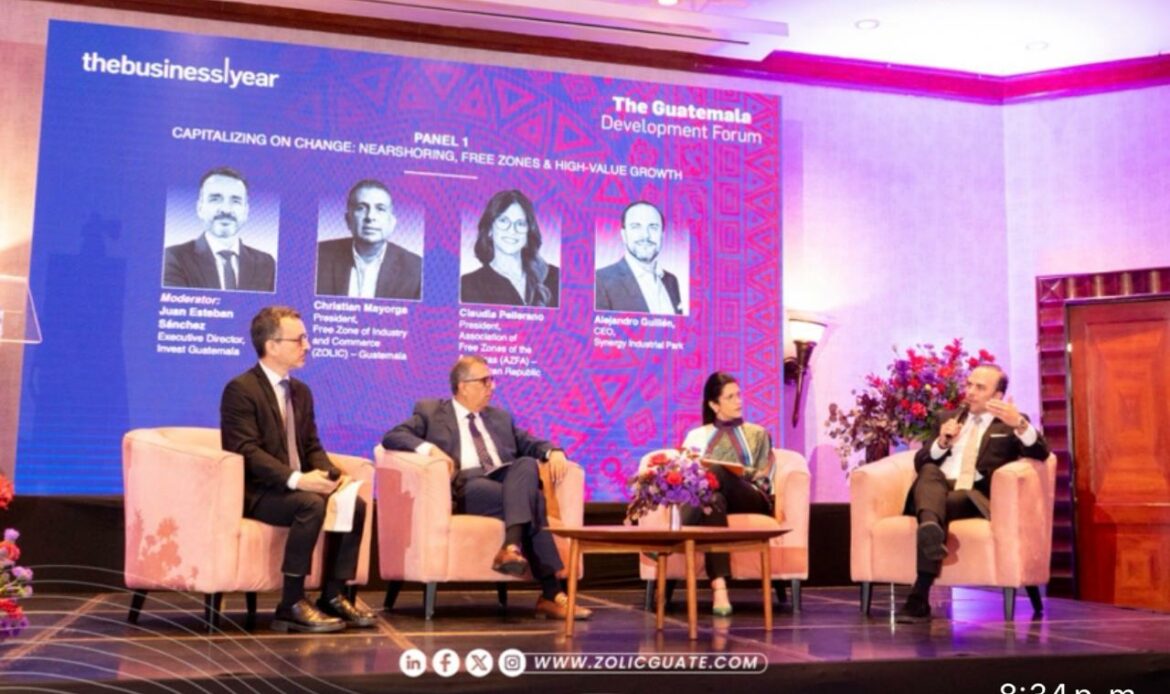
Mayorga participated in the panel Capitalizing on Change: Nearshoring, Free Zones, and High-Value Growth, along with Claudia Pellerano, president of the Association of Free Zones of Ibero-America (AZFA); Alejandro Guillén, CEO of Synergy Industrial Park; and Juan Esteban Sánchez, executive director of Invest Guatemala, who served as moderator.
During the conversation, Mayorga raised the need to shift from attracting individual companies to creating productive ecosystems. The proposal involves identifying an anchor company and, based on its operations, seeking out suppliers, component manufacturers, and service providers that can set up operations nearby.
The model would allow for targeting promotional efforts toward sectors in which Guatemala already has experience, infrastructure, or operating companies. Among the activities discussed during the panel were specialized manufacturing, auto parts, and agribusiness with higher value added.
The experience of Yazaki It was one of the cases mentioned. The company began operations in Guatemala within the ZDEEP Puerta del Istmo economic zone in Pajapita, San Marcos, and later announced a new investment in the same municipality. For ZOLIC, these types of operations make it possible to identify other companies that are part of the same supply chain and direct promotional efforts toward them.
Pellerano provided insight into the free trade zones of Ibero-America and discussed the conditions that have enabled various countries to develop industrial activities within these frameworks. Guillén, for his part, discussed the factors companies consider when deciding where to set up operations, including energy, logistics, infrastructure, connectivity, and the availability of talent.
Investment also depends on what happens outside the parks
That point tied in with another topic discussed at the Guatemala Development Forum: the infrastructure the country needs to support new investments.
The panel Closing the Infrastructure Gap: Logistics, Energy, and Regional Connectivity The meeting brought together Armando Salas Morfín of VAS Guatemala; Gerardo Chacón of iUNGO; and Paulo César Parra of ENERGUATE.
The conversation covered roads, logistics, energy supply, and regional connectivity. These are factors that directly affect the costs and timelines of an industrial operation: a company may have suitable facilities within an industrial park, but it needs to transport raw materials and products, have access to energy, and connect with ports, suppliers, and markets.
During the forum, Álvaro González Ricci, president of the Monetary Board and the Bank of Guatemala, discussed the country’s macroeconomic conditions and the need to complement them with improvements in infrastructure, logistics, energy, and human capital.
Interior Minister Marco Antonio Villeda addressed the issues of security and institutional stability in the context of the factors that companies consider when making investment decisions.
Cities that support economic activity
The program also addressed the relationship between investment and urban development.
On the panel Building the Future: How Urban Development Shapes Guatemala’s Economy, Javier Arzú of Distrito Futeca and William Bickford of PreCon discussed construction, mixed-use projects, and the growth of new centers of economic activity.
A new industrial operation also generates demand for transportation, housing, services, and suppliers within its area of influence. Therefore, the growth of economic activity creates new needs for the municipalities and cities where investments are concentrated.
The Guatemala Development Forum concluded with a presentation by Harris Whitbeck, executive director of INGUAT, who discussed tourism and community participation in generating economic activity.
Organized by The Business Year, the event brought together representatives from the public and private sectors to discuss the challenges Guatemala faces in its search for new investments.
ZOLIC's participation brought a specific proposal to the table: to focus efforts on sectors where Guatemala already has capabilities, identify anchor companies, and actively seek out other companies that could join their supply chains.