 Andrés Sandoval, CEO of Zona Libre Quetzal
Since its inauguration, the ZDEEP Quetzal Free Zone (ZLQ) Special Public Economic Development Zone has established itself as a key driver of development for the Escuintla region, boosting trade, investment, and job creation. One year after its launch, the achievements made and challenges overcome have solidified its strategic position within Guatemala’s logistics and economic ecosystem.
Having created 300 jobs in its first year and with projections indicating it will reach 1,000 direct and indirect jobs by 2025, the company continues to make progress. Currently, it has nine tenants operating in the logistics and retail sectors, with an investment exceeding $10 million. With the expansion of its infrastructure, more tenants are expected to join by the end of this year, bringing the total operational space to 150,000 square meters. Andrés Sandoval, CEO of ZLQ, shares with us in an interview the impact of the zone, its evolution, and the projections for the coming years.
How would you describe this first year of operation for the Quetzal Free Trade Zone?
It has been a challenge that has truly revealed the potential of this model. The process has its complexities, but the benefits to businesses and the ease of creating jobs are significant.
What have been the greatest achievements since the opening?
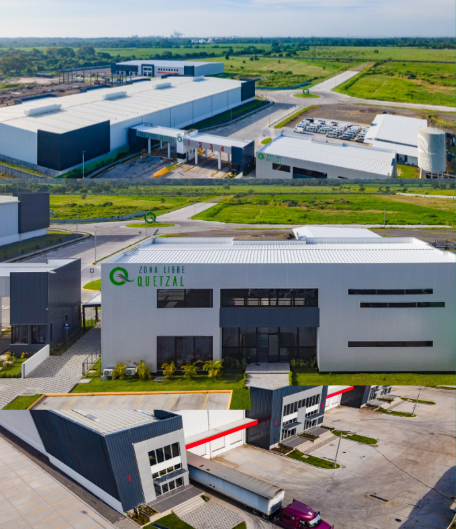
During this first year, we have established ourselves as a hub for development in Puerto Quetzal and Puerto San José, driving economic activity and improving local infrastructure. We have optimized logistics flows at Puerto Quetzal and APM Terminals and enhanced the competitiveness of companies in Guatemala through operational solutions. In addition, we have become the ZDEEP with the most users and the largest operational area, exceeding 77,000 square meters.
What were the main challenges you faced during this first year, and how did you overcome them?
One of our main challenges has been to strengthen our cooperation with SAT, ZOLIC, and our users—a process of continuous learning based on experience. Thanks to the growth of Zona Libre Quetzal and the support of SAT, we have expanded our team and will soon be increasing ZOLIC’s staff. Our priority remains optimizing customer service and the user experience, as we look ahead to the growth that lies ahead.
The local economy is experiencing remarkable growth, with our current and confirmed clients already generating nearly 200 direct jobs and more than 100 indirect and construction-related jobs.
How many users does Zona Libre Quetzal currently have, and what types of companies operate there?
We currently have 9 active users and expect significant growth this year. Our clients include logistics and retail companies that manage the storage, consolidation, and deconsolidation of goods, as well as those that are launching manufacturing and assembly operations.
How has the occupancy and operation of the ZDEEP ZLQ evolved since it opened?
Occupancy has increased because customers, having seen how SAT operates, trust the system and recognize our logistical advantages, which has driven demand.
Which sectors have shown the greatest interest in setting up operations in the Quetzal Free Trade Zone?
There is a strong manufacturing sector in Guatemala right now because of the nearshoring. Although we've managed to close a few small deals with foreign clients, it's taking longer to close deals with large clients, but we're in the process of doing so.
The logistics sector is very interested because it recognizes that there are growing needs near the port that we can meet. I am confident that this sector will become even more established in the area.
What impact has the Free Trade Zone had on Guatemala's local economy and foreign trade?
The local economy is experiencing remarkable growth, with our current and confirmed clients already generating nearly 200 direct jobs and more than 100 indirect and construction-related jobs. Demand for labor and services continues to rise.
Our clients include logistics and retail companies that manage the storage, consolidation, and deconsolidation of goods, as well as those that are launching manufacturing and assembly operations.
Although the impact on foreign trade is still unfolding, we are already seeing established companies that have achieved significant operational savings by being able to export with ease. This will strengthen the regional competitiveness of companies in the Quetzal Free Trade Zone, positioning Guatemala as the economic hub of the Northern Triangle and a strategic gateway to southern Mexico.
How has the Free Trade Zone facilitated logistics and international trade?
More and more companies that were not previously established in Guatemala are choosing to set up operations in ZLQ, which allows them to be more competitive since they do not have to pay taxes on the goods they will eventually export.
More than $10 million dollars have been invested, I estimate, since the opening. This figure will increase significantly this year, both due to the project's development and because of the users themselves, who are investing.
This advantage gives them the opportunity to consolidate, deconsolidate, and fulfill orders based on demand both locally and from other Central American countries. In fact, several companies have chosen to centralize their operations in ZLQ precisely because of the ease it offers for importing and exporting, thereby optimizing their logistics processes.
How much has been invested in the area since it opened, and how has that figure changed over the past year?
More than $10 million dollars have been invested, I estimate, since the opening. This figure will increase significantly this year, both due to the project's development and because of the users themselves, who are investing.

What are the expectations and growth projections for the second year of operation?
We hope to reach at least 1,000 direct jobs for users in the coming year and to have more than 150,000 square meters occupied by users as well. We want the Quetzal Free Zone to be seen as part of Puerto Quetzal’s port infrastructure and for us to be a solution for local and foreign investors.
How do you envision Zona Libre Quetzal over the next 3 to 5 years?
We envision this region as the consistent leader across all metrics and hope it will account for a significant percentage of Guatemala’s GDP and create more than 15,000 jobs.
What message would you convey to investors and entrepreneurs who are not yet familiar with Zona Libre Quetzal?
I would tell them to share their story with us and conduct a thorough review of their operations. We’re solving many operational and logistical problems, and I believe we offer a solution for everyone. If they don’t take the lead, they can be sure their competitors will—and they’ll be more competitive.