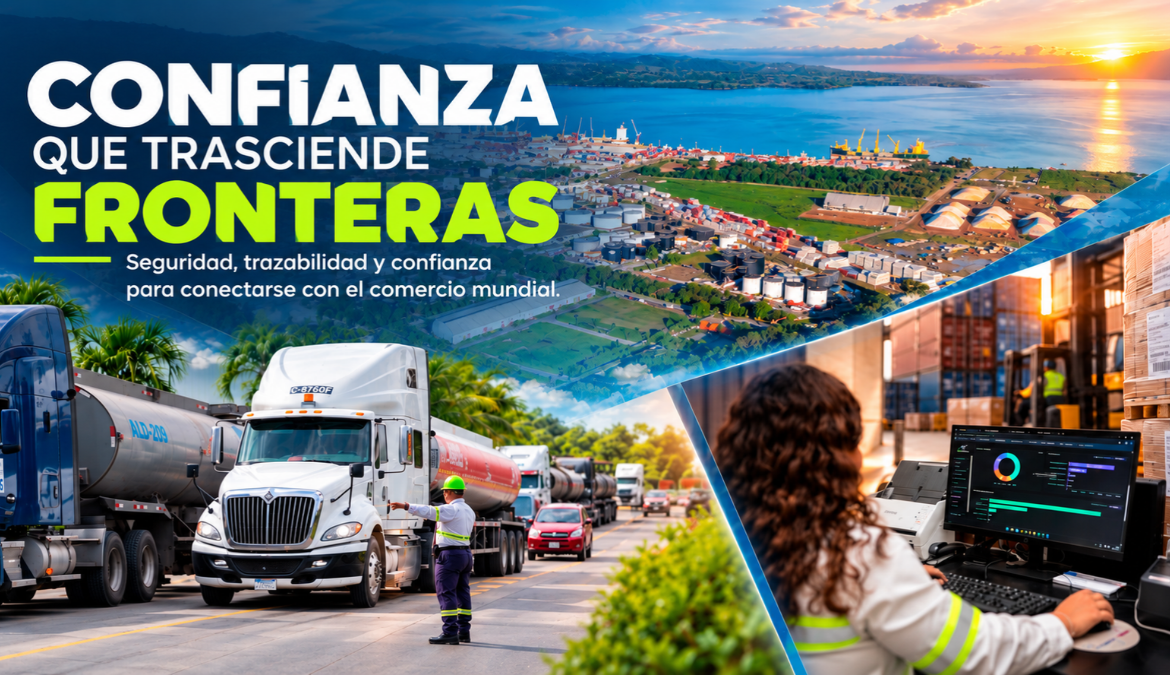
In international trade, moving goods quickly, It matters. But it's not enough. For a company, operational safety, traceability, controls, and the ability to reduce risks throughout the supply chain.
These elements are often viewed as technical or regulatory issues, when in fact they are part of the conditions that make an environment reliable for investing, producing, storing, or distributing goods. A facility may have a prime location, adequate infrastructure, and access to trade routes. However, it also needs clear procedures, access controls, tracking mechanisms, and security standards to govern the movement of cargo.
At the ZOLIC Government Complex, this vision is reflected in three standards that operate in different areas: BASC, the International Ship and Port Facility Security Code (ISPS), and Guatemala’s Authorized Economic Operator (AEO-GT) program.
BASC strengthens risk management and security controls within the supply chain. PBIP establishes protective measures for facilities associated with port operations, including access controls, risk identification, and response procedures.
OEA-GT, for its part, certifies compliance with safety and reliability standards related to the supply chain and customs procedures. But there is one factor that gives them even greater significance: these standards extend beyond Guatemala's borders.
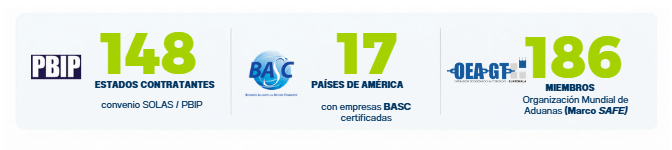
The ISPS Code is part of the international maritime security regime established under the SOLAS Convention, which has 148 contracting states.
BASC has certified companies in 17 countries in the Americas. And the Authorized Economic Operator model is part of the SAFE Framework of the World Customs Organization, an organization with 186 members.
Security doesn't just protect goods. It also builds trust for doing business beyond our borders.
For a company involved in international trade, this has a concrete implication: operating under standards that its customers, business partners, and authorities can recognize as part of an international culture of security, control, and risk management. This value takes on special importance in a landscape where supply chains increasingly connect more stakeholders, regions, and markets.
A disruption, a vulnerability, or a loss of traceability can result in delays, costs, and risk for an operation. Guatemala is geographically well-positioned for international trade. Turning that advantage into competitiveness requires infrastructure and connectivity, but also security, procedures, and technology.
At ZOLIC, we understand that these elements must work together as an integrated whole. That is why, rather than simply displaying certifications, what matters most is what they represent for the operations carried out at the Government-Owned Facility: security, traceability, and trust in connecting with international trade.