(Originally published on Oct. 14, 2025)
Since April 2021, when the Superintendency of Tax Administration (SAT) recognized it as an auxiliary agency of the Customs Service, the ZDEEP Michatoya Pacífico has established itself as a strategic pillar of the country’s economic development.
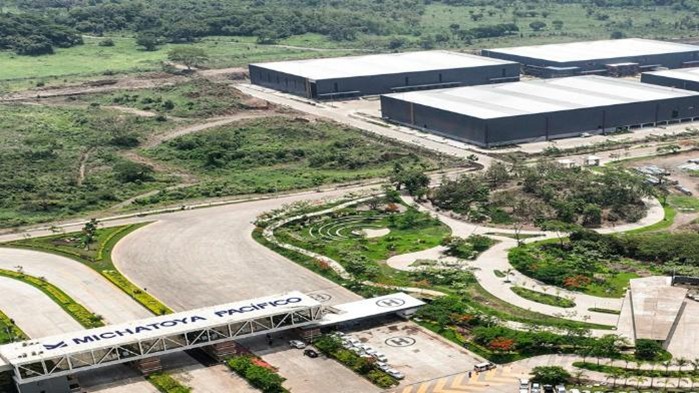
 Inspired by the success of Michatoya Palín, Michatoya Pacífico is emerging as a new industrial and logistics zone at kilometer 72 of the highway to Puerto Quetzal, Escuintla. The project takes advantage of the ZOLIC regime through the Public Special Economic Development Zones (ZDEEP), offering profitable investment conditions and a highly competitive environment.
Its creation represents not only a boost to private investment but also a national commitment: to decentralize economic growth away from the capital, position the south as a hub of development, and strengthen competitiveness
Guatemala's role in global trade.
With more than 3 million m² planned and 500,000 m² in operation, ZDEEP is home to 15 active tenants in the industrial, commercial, and service sectors. To date, the project has received an investment of US$$40 million, which has enabled it to grow from 1.5 million square meters to the current 3 million, providing a new boost to industrial and logistics development in southern Guatemala and strengthening investor confidence in the ZDEEP model.
 Resin processing plants, paper mills, agribusinesses, one of the largest manufacturers of biodegradable bags, logistics centers, and car dealerships coexist alongside distribution hubs that supply Central America, Colombia, and the Caribbean. “The vision for Michatoya Pacífico is to create a world-class development hub and smart city,” explains José Pablo Salazar, the project’s general manager.
The development is supported by world-class infrastructure: an 8-km, six-lane bypass directly connects the CA-2 and CA-9 corridors, Puerto Quetzal, and the Mexican border, optimizing logistics flow. The facilities include turnkey industrial warehouses starting at 2,000 m², 120,000 m² already in operation and meeting the highest global standards, and more than 400,000 m² of “built-to-suit” land, adaptable to the specific needs of each user.
 "Michatoya Pacífico guarantees an unlimited water supply, reliable power, high-speed fiber-optic internet, and a 20-year urban development plan that will integrate residences, hospitals, universities, businesses, and recreational spaces," says Salazar. ZDEEP is strengthening its electrical infrastructure by building two new substations that will be operational by the middle of next year, with a capacity of 200 megawatts, ensuring a stable and sustainable power supply for all users.
 Social Impact
The social impact is clear. In a region where a large part of the population used to depend on seasonal sugarcane harvesting, many families have now found new job opportunities within the project, with more dignified and sustainable working conditions. Local youth have access to technical and operational training, while women are taking on leadership roles in areas ranging from gardening to heavy machinery operation. “Before, people worked seasonally in the harvest; today they have stable jobs, benefits, transportation, and medical care. We’ve created nearly 1,000 direct jobs and 2,500 indirect ones,” says Salazar.
Sustainability Takes Center Stage
Sustainability is also a central focus at Michatoya Pacífico, which features 100,000 m² of green spaces and a nursery with more than half a million species being used for reforestation. “It’s not just about generating economic growth, but about ensuring environmental balance and quality of life,” Salazar emphasizes.

Looking ahead, the industrial park is strengthening strategic partnerships with INTECAP to train local talent, while the arrival of international maquilas is expected to bring millions in investment and up to 12,000 new
jobs. “We envision Michatoya Pacífico as a key industrial and logistics hub in Central America, attracting foreign investment and boosting regional competitiveness,” adds Salazar.
More than just an investment opportunity, Michatoya Pacífico represents a comprehensive development model: an ecosystem where industry, logistics, commerce, and urban life converge. Under the ZOLIC framework, this project exemplifies the transformative potential of Public Special Economic Development Zones as drivers of sustainable growth and national competitiveness.