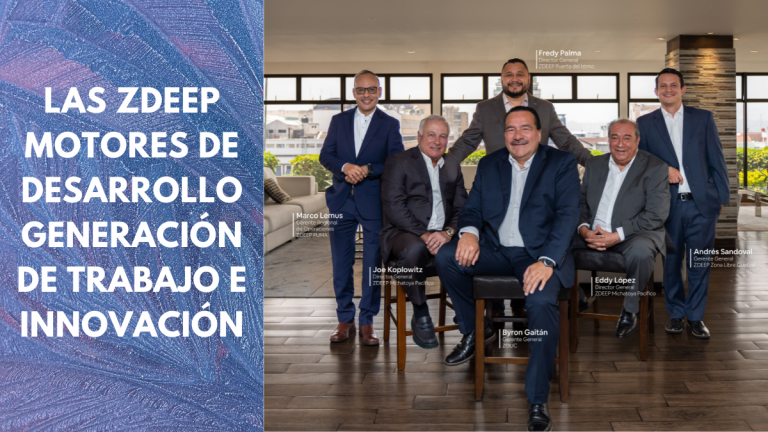
Public Special Economic Development Zones (ZDEEP) in Guatemala have become drivers of development, generating jobs and innovation. With the creation of these zones, ZOLIC has expanded its reach, transforming the country’s industrial and commercial infrastructure.
On Guatemala’s Caribbean coast, in the heart of commerce and industry, lies the “Santo Tomás de Castilla” Free Trade and Industrial Zone (ZOLIC), a logistics gem that has been driving the country’s economic development for more than half a century. Since its founding 51 years ago, ZOLIC has been a cornerstone, but the last 15 years have been the most transformative in its history.
ZOLIC’s transformation began in 2008 with the approval of amendments to its Organic Law through Decree 22-73. This reform was a watershed moment, allowing for the creation of Special Economic Development Zones (ZDEEP) through Decree 30-2008, expanding ZOLIC’s scope beyond Santo Tomás de Castilla to any part of the country.
The ZDEEPs are not only areas of opportunity, but also represent a modern vision of economic development.
The legal certainty provided by the system has been a magnet for investment. Over the past five years, ZOLIC has seen more than Q550 million invested in the construction of the first Special Zones, creating more than 10,000 direct and indirect jobs. This investment has not only revitalized the local economy but has also strengthened the country’s industrial, commercial, and logistics infrastructure.
As of early 2024, ZOLIC has registered 22 ZDEEPs, of which five are fully operational, nine are awaiting authorization from the Superintendency of Tax Administration (SAT) to begin operations, and another nine are in the process of being approved by ZOLIC’s Board of Directors. These zones are distributed across the departments of Escuintla, San Marcos, Zacapa, and Izabal, encompassing agro-industrial, commercial, and industrial developments.
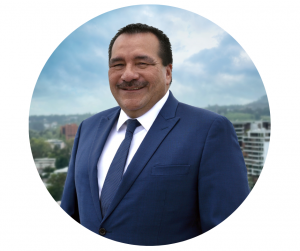 Engineer Byron Gaitán, General Manager of ZOLIC, stated, “The creation and expansion of the ZDEEPs are tangible proof of our ability to innovate and adapt to the needs of the global market. We are not only building infrastructure but also sowing the seeds of progress and prosperity for future generations of Guatemalans.”
PUMA I
It is the oldest ZDEEP, with 11 years of operation, according to Marco Lemus, Puma’s regional operations manager. The country’s strategic location and legal certainty motivated them to invest in Guatemala; they wanted to import and export hydrocarbons, petroleum products, and fuels to Central America and the Americas.
At ZDEEP PUMA I, there is a terminal with a storage capacity of 1.2 million barrels, during its eleven years of operation, have invested US$$10 million And according to Lemus, they still have “potential investments and are not ruling out opening their doors to other clients in the near future as part of the company’s strategy.”.
This Development Zone generates 100 direct jobs and the same amount—or a little more—indirectly.
QUETZAL FREE ZONE
Andrés Sandoval, General Manager, Quetzal Free Zone highlights an investment of just over Q 200 million and the generation of 280 jobs Between direct and indirect jobs, its facilities were just inaugurated in March.
He emphasizes that being located 4 kilometers from Puerto Quetzal makes operations much easier, more efficient, and faster. He adds that they have top-quality facilities—warehouses starting at 600 m²—and a flexible model that adapts to businesses of any size.
As additional advantages, it boasts a thriving population of approximately 150,000 residents with varying levels of work capacity, and excellent electrical and water supply services.

GATE OF THE ISTHMUS
The Mexico-Guatemala border region has always had enormous potential, as it is the main land trade gateway between North America and Central America, which is why Puerta del Istmo decided to adopt the ZDEEP designation, given the numerous logistical and tax benefits it offers to all companies that set up operations within the Zone, making it Guatemala’s primary tool today for attracting domestic and foreign investment, according to its CEO, Fredy Palma.
Puerta del Istmo offers state-of-the-art facilities that meet high standards for infrastructure and security, and creates the conditions necessary to ensure our users’ operations remain competitive, given that more than 900 vehicles cross the border daily.
It is home to Guatemala’s only Transfer Center, which allows vehicles to enter directly from Mexico into Puerta del Istmo with their Mexican registration plates and in accordance with the weight and dimension standards used in Mexico, thereby reducing border crossing times to 2 hours, making the PDI Transfer Center a significant achievement in facilitating both international and Guatemalan trade.
Puerta del Istmo has invested to date Q154 million quetzales for the development and construction of 46,000 square meters in industrial buildings, and as of June 2024, they are investing Q 84 million quetzales more for the construction of an additional 30,000 square meters of new industrial warehouses.
It has generated 1,250 direct jobs and around 3,000 indirect jobs, is currently setting up 4 new businesses, which will create an additional 500 direct jobs.
MICHATOYA PACÍFICO
Architect Carlos Eddy López, CEO of ZDEEP Michatoya Pacífico, notes that positioning the country as a key player in the global industry and international trade, as well as taking advantage of the tax benefits offered by the regime, were reasons for investing in Guatemala.
During the first phase of construction, The investment totals US$$100 million, but it It projects revenue of US$$1,000 million and generate 65,000 direct jobs and 260,000 indirect jobs, through which they hope to help create decent employment that will contribute to reducing irregular migration to the United States.
ZDEEP is located at 30 kilometers from Puerto QuetzaIt is located 72 from Guatemala City. It is positioned as a world-class logistics hub covering an area of more than 10 million square meters. It is home to the country’s largest, most innovative, and most sustainable ZDEEP, featuring renewable energy, efficient water use, and a nursery with 150,000 native trees.
It has its own six-lane connector road linking the CA-9 Puerto Quetzal highway with the CA-2 Oriente highway, designed to streamline transportation logistics.
ZOLIC and ZDEEP continue to drive development and progress, reflecting Guatemala’s commitment to a prosperous and sustainable future as part of a history of transformation, innovation, and opportunities throughout the country.